Your CEO may be among those who are asking HR leaders, ‘Why hasn’t productivity taken off as fast as expected?‘ It isn’t because employees are simply resistant to change. Work slows when employees interpret work differently. And with the collision of five generations in the workplace, managers must translate and negotiate across five different realities just to move work forward.
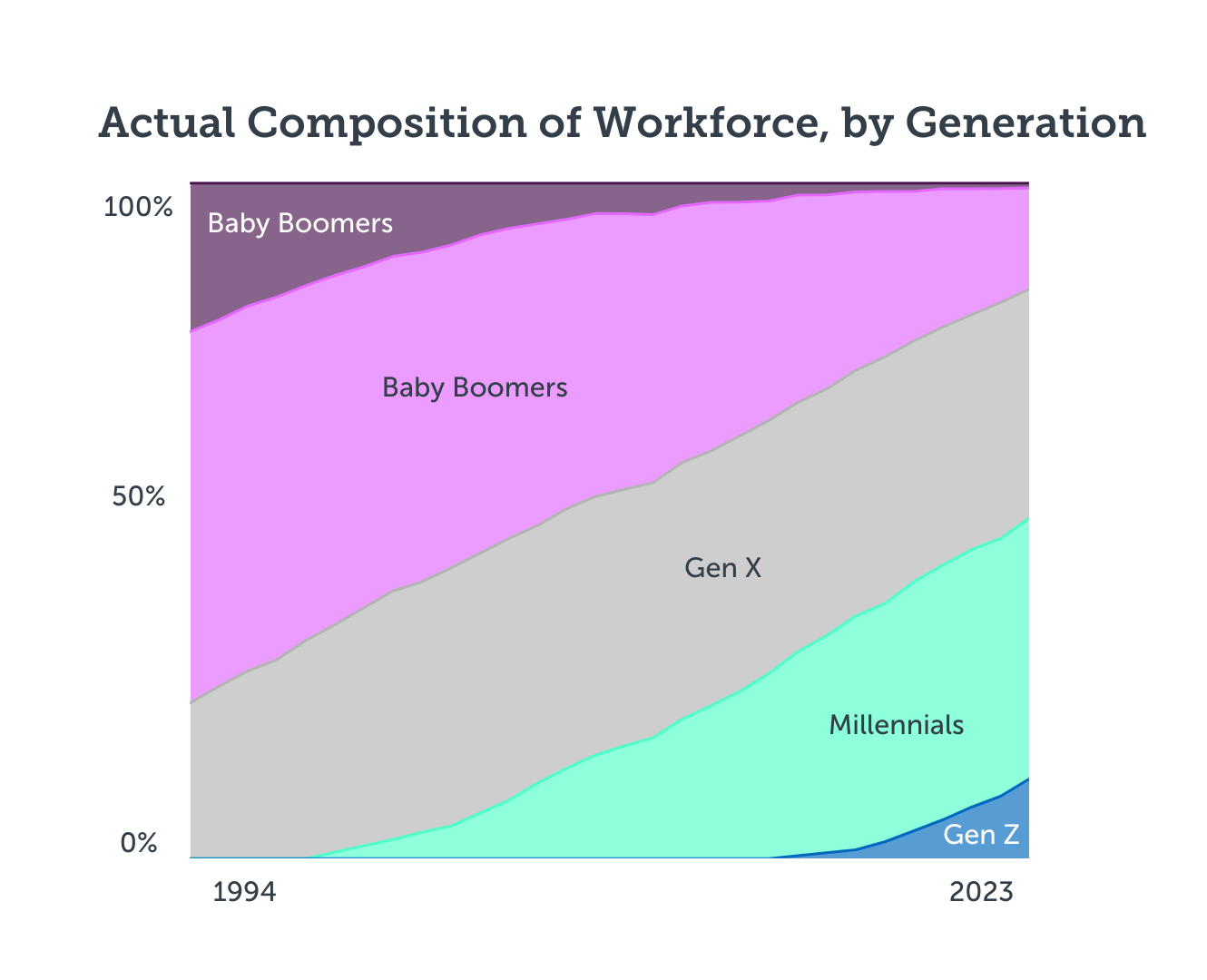
Over the past decade, Gen Z has grown to represent 15% of the workforce, and they are projected to make up one-third of it by 2030. Perception gaps between generations affect how decisions are received, how expectations are interpreted, and how efficiently teams collaborate. What sounds “clear enough” to one generation may feel ambiguous or risky to another. For HR leaders, the top priorities are to align expectations so that all employees feel grounded and to provide the structure managers need so their teams can be productive.
Five Interpretations of the Same Workplace
You never want to assume a colleague’s experience based on age or generation. However, employees in the same generation may share historical touchpoints along the way that shape how they see work. For example, older employees built their careers in more stable cycles, where pathways and expectations were clearer, while younger employees entered the workforce amid volatility, rapid technological change, and rising costs that pushed major life milestones such as marriage, home buying, and caregiving to later stages of life. These differences influence what employees look for from work and how much context they need to act.
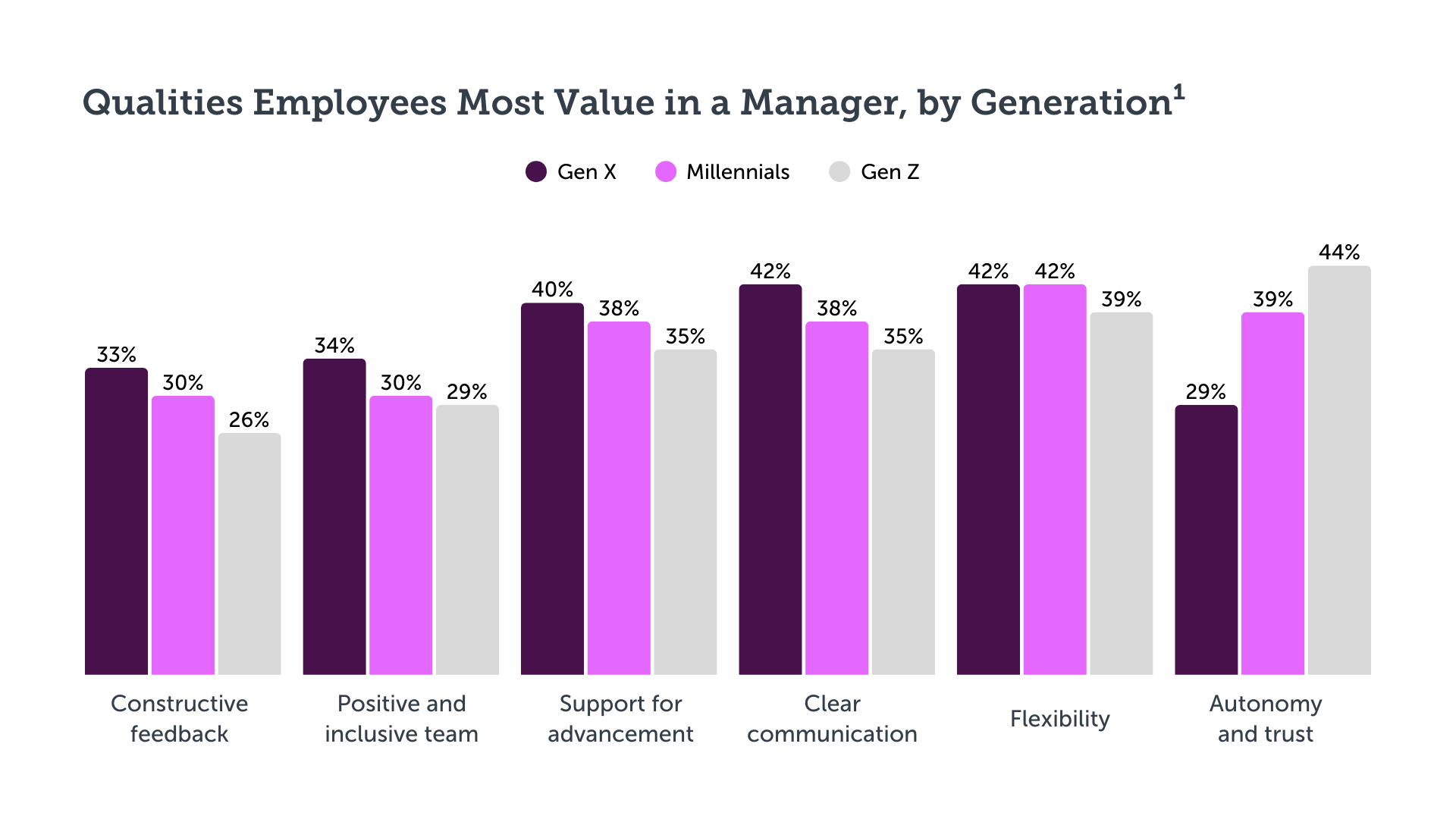
In a recent Seramount study, 44% of the youngest employees said they aspire to become managers but emphasized the need to protect work-life boundaries as they advance. Some specifically said, “I want to have a good work/life balance, and the requirements for advancing go directly against that, therefore making me not want to advance.” Meanwhile, only 27% of their older colleagues expressed interest in supervising others. Across groups, a majority acknowledged that communicating across generations is challenging.
Qualities Employees Most Value in a Manager, by Generation1
As a result, managers are burning out faster than employees at any other job level. At least 80% report experiencing one or more symptoms of burnout, while fewer than one-third of senior managers feel comfortable speaking about it at work. They’re also leading teams who feel just as stressed: 37% of staff feel so overwhelmed that it hinders their job performance. The good news is that HR leaders can help significantly reduce this pressure.
How Clarity and Consistency Unlock Better Performance
Effectively managing multigenerational teams requires more than navigating preferences across age groups. It requires creating the conditions for consistent execution, no matter how much life circumstances and definitions of “career” may vary. The most effective HR leaders recognize that managers cannot be the sole translators of organizational priorities. Instead, they make team alignment a shared responsibility.
Three Practices That Help Managers Boost Team Collaboration
Set shared expectations, not individual preferences Many “generational differences” are really inconsistencies in norms. HR can reduce friction by defining what strong communication looks like, how teams escalate decisions, and how priorities should be interpreted across roles. Clear expectations cut down on the need to re-explain and allow managers to focus on moving work forward.
Make the “hidden” visible For younger employees, organizational signals carry outsized weight. They want to understand how change affects their contributions and growth. Regular check-ins and ongoing clarity about the reasoning behind decisions help close interpretation gaps and increase momentum across the team.
Give managers structured support Providing consistent language and ready-to-use resources helps managers clearly communicate expectations. These tools remove the guesswork and reduce the amount of time spent explaining or rephrasing guidance.
When expectations are consistent and managers feel supported, work can move forward at the rate leaders expect. Multigenerational teams become more confident in their interactions, so managers can spend less time translating and more time leading. To get a fuller view of the forces shaping performance this year, download Seramount’s State of the Workforce report.
Maria is a Senior Product Marketing Manager at Seramount. In this role, she supports organizations' efforts to create more inclusive workplaces by providing valuable insights and resources via webinars, blogs, guides, infographics, and more. Prior to joining Seramount, Maria worked in enrollment marketing, diversity recruitment, college admissions, and K-12 case management.
Maria is a Senior Product Marketing Manager at Seramount. In this role, she supports organizations’ efforts to create more inclusive workplaces by providing valuable insights and resources via webinars, blogs, guides, infographics, and more. Prior to joining Seramount, Maria worked in enrollment marketing, diversity recruitment, college admissions, and K-12 case management.
Maria holds a degree in Social Work from Baylor University. She currently resides in Philadelphia, PA. In her free time, she loves trying new brunch spots, connecting with her women’s hiking club, and working on her indoor garden.