Everyone is talking about AI, but each part of the organization is asking a different question: Boards are looking at their investment and asking when they will see a return. Business leaders are focused on how AI can redesign workflows, accelerate decisions, and reduce costs. Managers are being asked to turn that ambition into action while already managing heavy workloads. Employees are trying to understand what AI adoption will mean for their roles, their career paths, and even the opportunities available to the next generation of talent.
As you can imagine, this creates a complicated implementation environment. The challenge is not simply to get people to use AI; it’s to align stakeholders who are entering the conversation with different priorities, pressures, and definitions of success. For inclusion leaders, that tension matters, because trust, access to opportunity, and the employee experience will influence how successfully AI is adopted.
Four AI questions inclusion leaders should ask for 2027
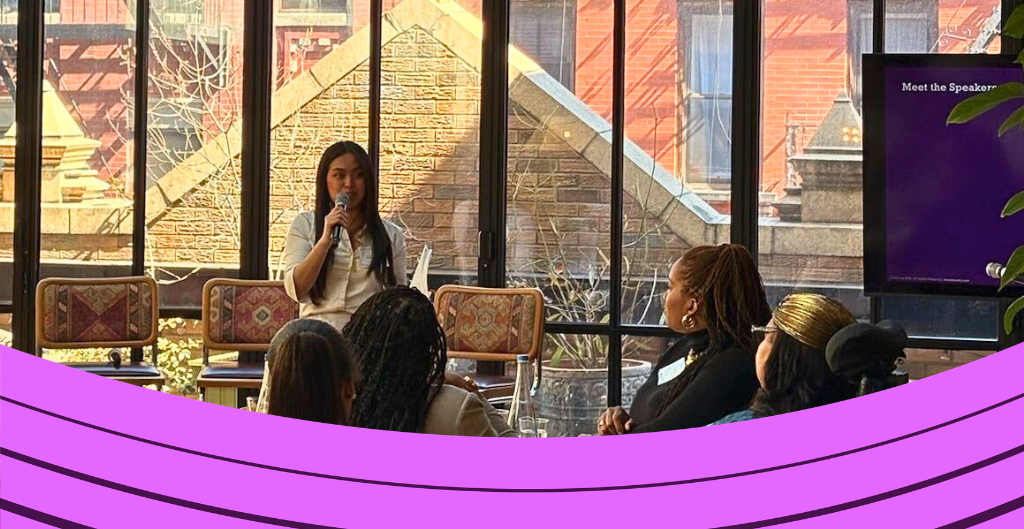
Recently, Seramount brought together more than 100 inclusion leaders for an AI Intensive focused on the trends, use cases, and questions shaping workplace AI today. The discussion surfaced four questions inclusion leaders should be asking as they prepare for 2027 planning:
1. Are we building AI fluency or simply giving employees access to tools?
AI adoption has moved quickly. More than 75% of organizations report that AI is being used somewhere in the business. But widespread use doesn’t necessarily mean deep adoption. On average, organizations are using AI in only 3 of 11 business functions, and much of today’s activity remains concentrated in individual productivity tasks such as summarizing meeting notes, analyzing data, drafting content, and creating presentations.
Access is important, but as inclusion leaders know, access is only one piece of the puzzle. Organizations need to prioritize preserving judgment, enabling managers, and ultimately, encouraging use cases that improve the work. The question is no longer simply whether employees have access to AI but whether they have the skills and judgment to use it effectively.
That distinction matters because AI will reshape jobs, and it’s far more likely to change jobs than eliminate them outright. Jobs are bundles of tasks, responsibilities, decisions, and relationships. AI may automate or accelerate some of those tasks while leaving others dependent on human judgment. Seramount’s forthcoming research points to a future in which roles evolve, tasks are redistributed, and expectations change over time rather than a future in which jobs simply disappear.
That makes AI adoption a change-management challenge as much as a technology challenge. The tools available to organizations are increasingly similar. What will differ is how well organizations prepare people to use them: building judgment, redesigning work, setting clear expectations, and helping employees adapt as roles change.
What this means for inclusion leaders
Inclusion leaders can help ensure AI fluency is built equitably across the workforce, not just among early adopters. That includes evaluating who has access to training and role-specific guidance and identifying where employees may need additional support as roles and responsibilities begin to change.
2. Have we created enough guardrails to build trust in AI use without making employees afraid to experiment?
Faster doesn’t automatically mean better. AI can dramatically reduce the time required to draft, summarize, analyze, and generate ideas, but human judgment is still required to evaluate accuracy, context, quality, and risk. As Seramount researcher Stephanie Larson, PhD, states, “AI collapses the cost of production, not the cost of judgment.”
Employees are already approaching AI with caution. Only 31% of individual contributors express enthusiasm about AI adoption at work, while 52% of employees said they are worried about how AI may be used. Concerns include keeping pace with the rate of change; ethical, environmental, and security issues; and potential impacts on promotions and pay.
Trust is also limited: Fewer than half of the U.S. adults surveyed are willing to trust AI systems. Building that trust starts with psychological safety. Employees need to feel comfortable asking questions, admitting when they do not understand a tool, challenging AI-generated outputs, and experimenting in ways that feel safe and encouraged.
What this means for inclusion leaders
Inclusion leaders can help make AI adoption feel safer and more usable by pressure-testing responsible-use policies and identifying where employees may be hesitant to ask questions or experiment. They can also use employee listening channels, including ERGs, to surface where trust is breaking down and where additional guidance or support is needed.
3. Who is gaining AI capability in our organization and who is at risk of being left behind?
Where could AI unintentionally reinforce inequities we’ve worked to dismantle? Access to AI is not the same as access to the benefits of AI.
The learning curve is already uneven. Only 12% of U.S. workers have received AI-related job training, and AI use is more common among executives and managers than among individual contributors. Two-thirds of HR professionals also report that their organizations have not done enough to prepare employees for an AI-powered future.
Those differences matter because employees do not build capability through access alone. They also need training, role-specific guidance, manager reinforcement, and freedom to experiment. When those conditions vary across the workforce, capability gaps can grow into opportunity gaps.
Organizations can’t assume that judgment, capability, and equitable access will simply catch up as adoption increases. Those conditions must be built alongside the technology.
What this means for inclusion leaders
Look beyond overall adoption rates and examine who is actually building capability. Who is receiving training? Who has manager encouragement? Who has role-specific guidance? Who has space to experiment safely? And who is being left to figure it out on their own? Inclusion leaders can use those differences to identify where capability gaps may become opportunity gaps and where additional support is needed.
4. Where does inclusion need a formal role in our AI governance and decision-making process?
In a recent Seramount poll, 95% of inclusion leaders said they should be part of AI conversations, yet only 13% have a clear strategy for strengthening the human conditions that enable successful AI adoption, such as trust, psychological safety, and learning.
That gap points to an important question for 2027 planning: Does inclusion have a seat at the table before AI decisions are made, or is it being asked to respond after implementation?
Inclusion can help the organization identify where workforce risks may emerge, how different groups are experiencing adoption, where human accountability needs to remain visible, and whether employees understand how AI is changing expectations for their work.
Seramount’s 2026 spring research points to five places inclusion leaders can start: workforce risk, readiness gaps, psychological safety, employee listening, and more meaningful measures of adoption. The goal isn’t to own the AI strategy. It’s to make sure the human impact is visible early enough to shape it.
And that matters most upstream. Inclusion leaders need a role when organizations are setting AI policies, redesigning work, planning training, and deciding how success will be measured. Once gaps in trust, access, and opportunity are embedded into new ways of working, they become much harder to undo.
What this means for inclusion leaders
Define where inclusion should have a formal role in the AI decision-making process. That could include:
Ultimately, AI governance isn’t just about deciding what the technology is allowed to do. It’s also about deciding who remains accountable, whose perspective informs those decisions, and whether employees have the skills, information, and trust they need to navigate the change. As organizations set their 2027 priorities, those are questions inclusion leaders should be prepared to bring to the table.
Angela-Gabrielle Pajarito Lacerna believes the strongest HR strategies keep the human at the center.
As Director of Partner Development at Seramount, Angela works with CHROs and senior HR, Talent, and Inclusion leaders to navigate evolving workforce priorities and connect their organizations with Seramount’s research, advisory expertise, and executive resources.
Angela-Gabrielle Pajarito Lacerna believes the strongest HR strategies keep the human at the center. She is passionate about helping HR, talent, and inclusion leaders navigate evolving workforce challenges and build workplaces where both people and organizations can thrive.
As Director of Partner Development at Seramount, Angela works with CHROs and senior HR, Talent, and Inclusion leaders to navigate evolving workforce priorities and connect their organizations with Seramount’s research, advisory expertise, and executive resources. She cultivates partnerships across industries including Retail, Technology, HR & Staffing, Management Consulting, Government, and Nonprofit sectors, helping leaders address challenges spanning workforce strategy, talent and culture, inclusion, employee resource groups, and the changing role of HR.
Angela previously served on the board of the National Association of Asian American Professionals (NAAAP) DC. She is also actively engaged in Employee Resource Group programming. Angela holds a BA from Franklin & Marshall College and an MA from Columbia University. She resides in Baltimore Maryland, where she enjoys visiting museums, taking dance classes, trying new restaurants and cooking.